12-1999 09041999

Date:  9 April 1999

Location: Xian Sheng’s house, Taman Melawati

(A) The Future of Medicine.

Note: Xian Sheng was referencing the TIME Magazine on the topic – the Future of Medicine, dated 11 Jan 1999.

  1. Xian Sheng said that we must be familiar with the two terms, DNA and RNA. These are new jargon that we must know so that we can follow along when newspapers discuss biological evidence, such as the DNA, sperm and forensic details mentioned in Anwar Ibrahim’s legal cases. Without this knowledge, we would simply be reading the words without truly grasping their significance.

  2. Xian Sheng raised the question of whether DNA or RNA is responsible for providing the instructions needed to replicate new cells. Understanding these concepts is essential for a basic grasp of Genetic Engineering, which represents the cutting edge of 21st-century technology. Computers are no longer the most advanced technology; therefore, we must stay informed and keep our knowledge up to date.

  3. Xian Sheng began by explaining that Ribose is a pentose sugar—a type of sugar containing five carbon atoms—that serves as the structural framework for the RNA ladder. Its chemical structure consists of 5 Carbon atoms, 10 Hydrogen atoms, and 5 Oxygen atoms, represented by the formula C5H10O5. In the natural world, it is almost always found in its Dextrorotatory (D) form. Essentially, Ribose acts as the sugar backbone that holds the RNA molecule together.

  4. Ribonucleic Acid (RNA) is the genetic polymer responsible for transporting messages within our cells. Xian Sheng explained that “NA” stands for Nucleic Acid—large, complex molecules that store and transmit genetic data. He highlighted three primary types of RNA: mRNA (Messenger RNA): This acts as a courier, transcribing genetic instructions from the secure DNA vault inside the nucleus and carrying that code out to the cytoplasm. rRNA (Ribosomal RNA): This serves as the motor for the ribosome, the cell’s assembler, which physically stitches amino acids together. tRNA (Transfer RNA): This component reads the three-letter genetic code and delivers the specific amino acids required by the ribosome to build proteins.

  5. Xian Sheng described how ribose sugars bond with nitrogenous bases—specifically Uracil, which is unique to RNA—to build the RNA structure. He noted that Uracil forms Uridine Triphosphate (UTP), a molecule essential for activating glucose to produce Glycogen. This process plays a vital role in the body’s various cellular and chemical activities.

  6. Xian Sheng went on to explain DNA, or Deoxyribonucleic Acid. These nucleic acids are typically polynucleotides that serve as the fundamental blueprint for heredity. Primarily found within the cell nucleus, DNA is structured as a double helix. This “twisted ladder” is held together by hydrogen bonds between purine bases (Adenine and Guanine) and pyrimidine bases (Thymine and Cytosine), which point inward. The structure is supported by two outer strands consisting of alternating deoxyribose sugar and phosphate groups.

  7. Xian Sheng further explained that although every somatic cell in the human body carries the exact same DNA, mRNA functions differently depending on the cell type. In cells like muscles, nerves, neurons, or skin, the mRNA specialises by transcribing only the specific genetic codes relevant to that particular cell’s function. This process allows cells with the same blueprint to perform vastly different roles.

(B) Is Japanese Encephalitis the reason for the outbreak?
  1. Xian Sheng paraphrased the opening of “The Biotech Century”, noting that computers are no longer the leading edge of technology. He explained that the previous era was the century of physics, defined by physicists transforming silicon into computing power. Xian Sheng added his view that the century of physics also gave rise to the atomic bomb through nuclear physics. While people thought of the atomic and hydrogen bombs as dangerous, he suggested that, despite their potential danger, they are not as dangerous as genetic engineering.

  2. Xian Sheng stated that biological warfare (correctly referring to germ warfare rather than chemical warfare) is more serious than nuclear warfare involving atomic or hydrogen bombs. He noted that while nuclear weapons have a vast fallout area, biological warfare involves the release of dangerous germs. These germs multiply within the hosts and spread across borders, creating a threat that continues to grow unless a cure is found.

  3. Xian Sheng used Japanese Encephalitis (JE) as an illustration. He read to the followers that scientists describe JE as a virus transmitted to humans through the bites of infected Culex mosquitoes. Xian Sheng then raised the question of whether other methods of JE transmission might exist. (Scientists state JE can only be transmitted via the bites of the Culex mosquitoes.)

  4. A sister enquired if consuming meat from an infected animal could be another method of transmission. Looking at the current transmission rates in Malaysia, Xian Sheng agreed that the disease might be spread through eating the infected meat. (Although proper cooking kills the virus and ensures the meat is safe to eat, the disease can be transmitted when handling the raw infected meat.) Consequently, Xian Sheng expressed doubt regarding the scientific explanation provided for the current outbreak. He reiterated the earlier statement, “virus transmitted to humans through the bites of infected Culex mosquitoes.”

  5. Xian Sheng questioned the actions of the authorities, arguing that if the meat were not harmful, the pig farmers should have been permitted to butcher and sell it in the market. Instead, the authorities arrested those selling pork. He cited a specific instance where an individual was arrested for selling pork at the Taman Maluri market.

  6. Xian Sheng asked why the authorities prevented abattoirs from slaughtering pigs. A sister suggested this was an attempt to control the JE outbreak by culling the infected animals. Xian Sheng then questioned the fate of the healthy pigs, asking why the authorities did not draw blood to test for the JE virus. He argued that if the pigs were proven to be free from infection, they should have been considered safe to be slaughtered for sale.

  7. A brother suggested that no one was willing to take the risk of performing those tests. Xian Sheng agreed, noting that this supported his earlier point: he doubted the scientific claim that the JE virus is spread to humans solely via infected Culex mosquitoes. He argued that abattoirs were stopped from slaughtering pigs because the authorities knew that the meat provided another route for transmission. He believed the government would attempt to spin the narrative, which only strengthened his doubts regarding their scientific explanation of the transmission.

(C) Pigs and not mosquitoes are spreading the disease.
  1. Xian Sheng shared a conversation he had with a pig farmer who had spent his entire life raising pigs. This chap (old English word for man) questioned the government’s claim that mosquitoes were the source of the infection. He explained that because his house was located near the pig’s stable, he could smell the breath exhaled by the pigs while they slept. Xian Sheng then raised the possibility of whether breath containing liquid particulates could carry the virus and transmit the disease to humans.

  2. A brother suggested a second possibility: the Hendra virus. Xian Sheng noted that the pig farmer had been correct in his assessment of the virus even before the government officially identified the pathogen involved. The farmer explained that his knowledge came from years of experience; those living near pig farms are accustomed to breathing in the air exhaled by the pigs as they sleep.

  3. The pigs contracted the disease from fruit bats and subsequently transmitted it to humans by expelling the virus through their powerful exhalations. The brother compared this airborne transmission to the way the flu or a cough is spread.

  4. Xian Sheng reiterated that the pig farmer’s assessment was not wrong. He questioned whether the government had explored alternative methods of transmission, rather than insisting the virus was spread by Culex mosquitoes. He noted that the official advice for people to sleep under mosquito nettings did nothing to prevent the virus from spreading.

  5. Nevertheless, Xian Sheng advised avoiding pork for the time being, until the government was sure that pigs no longer carried the disease.

(D) Humans are dead-end hosts for the Nipah virus.
  1. The article Xian Sheng read indicated that pigs act as carriers, leading him to conclude that Chinese farmers who refuse to let the government cull their livestock are stupid.

  2. The article noted that humans act as dead-end1hosts for this virus. Xian Sheng explained that once the Nipah virus enters a person’s system, it moves through the bloodstream to organs such as the heart and brain. The condition can worsen rapidly, causing fatal encephalitis and severe neurological decline before resulting in a coma.

  3. However, if a person has a strong constitution or if they were previously exposed to the Hendra virus or JE, they may have unknowingly developed antibodies that allow them to fight off Nipah. Xian Sheng also noted that inoculation, particularly for JE, helps individuals build immunity against the disease.

(E) The authorities’ information about the JE is crap.
  1. Xian Sheng read from the government’s fact-sheet:
    1. Eating pork will not cause JE;
    2. Pigs are not the ones bringing the virus to humans;
    3. You cannot contract JE by being in close contact with the infected person;
    4. You cannot get infected by touching or being in close contact with pigs;
    5. Not all fevers are symptoms of JE;
    6. JE cannot be transmitted from pigs to humans, nor people to people;
    7. Vaccines are not 100% effective;
    8. Only Culex mosquitoes carry the JE virus.
    These are the materials the government is distributing to the public, findings that are supported by researchers and scientists.

  2. Symptoms and effects: flu-like fevers, chills, tightness, drowsiness, headaches, nausea, gastrointestinal symptoms, fits, convulsions, malaise, vomiting, auto-phobia, pain in the eyes caused by light, confusion and agitation; memory lapses may also occur. These are the things that people have to look out for. Only people who are more than 55 years old may be at a higher risk after infection.

  3. Xian Sheng questioned the fact-sheet, asking how many of the deceased were actually over 55 and whether anyone under 55 had died. The followers’ responses supported Xian Sheng’s view that the government’s details were largely incorrect. When asked about the distributed fact-sheet, one follower bluntly stated that it was crap.

  4. Nevertheless, despite the misinformation, Xian Sheng advised the followers to be careful.

(F) Fruit bats are natural reservoirs for deadly viruses like Hendra and Nipah.
  1. The fact-sheet further detailed the discovery of the first Hendra virus in horses in Australia, an event reported in a local newspaper. It stated that the source of the virus is fruit bats, which are capable of infecting other animals.

  2. Xian Sheng proposed a hypothetical scenario in which individuals living near these fruit bats might have incidentally developed immunity to the Hendra virus.

  3. Sister Amy Too enquired whether all fruit bats are infected with these diseases or if they serve as natural carriers. Xian Sheng responded that it is indeed possible for fruit bats to carry these viruses naturally.

  4. Nevertheless, Xian Sheng reiterated that if a person has a strong constitution and has been exposed to various past infections, they may have developed a robust immune system capable of fighting off the Nipah virus. He cited examples of victims who fell into a coma but later regained consciousness. While these individuals survived the disease, they did not make a full recovery and continued to suffer from residual deficits.

  5. The article Xian Sheng read described humans as dead-end hosts who would eventually succumb to the disease. He cited the Black Death, also known as the Black Plague, a major pandemic transmitted by black rats that swept through Europe, claiming more lives than World War II. Another example Xian Sheng offered was cholera, a disease that has historically claimed more lives than warfare.

(G) The US invaded Iraq because of WMD.
  1. Xian Sheng stated that he loves the book “Man and Microbes. Disease and plagues in history and modern – Arno Karlen” and recalled mentioning it during a previous meditation session. He then asked how many of the followers present had heard him speak about it. The book discusses how diseases such as the Black Plague, cholera, influenza, and others follow specific patterns in spreading and killing people.

  2. Xian Sheng then discussed why the Americans felt compelled to attack Iraq2. The American claim was that Iraq held such weapons—nuclear, chemical, and biological, specifically germ warfare. He stated that once these germs were released, their spread would be impossible to control, and the Americans were well aware of the severity of this risk. One brother laughed, pointing out that the Americans also possess WMD. Nevertheless, Xian Sheng replied that the Americans had stopped manufacturing them and had contained and sealed their stockpiles3. Xian Sheng added that the Americans know that if these weapons fall into the wrong hands, the entire Earth could be completely destroyed, not by nuclear bombs, but by biological warfare.

  3. Another danger facing the world is humanity’s experimentation with genetic engineering. He concluded this topic by stating that the situation is becoming increasingly serious, signalling that the world is moving towards a perilous era where weapons exist that could trigger extinction-level events.

 
(H) Unlimited DNA combinations for humans.

Note: Xian Sheng misunderstood the application process for patenting genetic sequences.

  1. Xian Sheng asked if the followers knew that DNA can be mapped. (Mapping DNA is akin to creating a detailed atlas of a genome, revealing the locations of key genes.) He then asked how many genes have been identified in humans.

  2. He noted that some researchers have patented specific gene sequences within the mapped genome. Xian Sheng explained that the human genome map resembles the bar codes found on product labels in a supermarket.

  3. Initially, he stated that researchers had submitted patent applications covering between 5 and 60 genetic sequences. However, the U.S. Patent and Trademark Office later imposed a rule limiting each application to a maximum of 10 genetic sequences. Consequently, covering 60 sequences would necessitate six separate applications and the payment of multiple filing fees.

  4. Xian Sheng questioned whether it is morally right to allow researchers to patent our DNA. He added, “Who can own your DNA?” He reminded the followers that every individual possesses a unique set of DNA. Therefore, can a stranger truly own our genetic map? Ultimately, Xian Sheng asked who holds the right to decide on the ownership of our genetic sequences. While we might argue that our DNA belongs to us, researchers have already begun to patent these genetic sequences.

  5. Xian Sheng voiced his concern over the potential legal ramifications of patenting human DNA. He posed a critical question: would we eventually be forced to pay licensing fees merely to access our own genetic data? He noted that such a situation would be deeply ironic.

  6. Xian Sheng returned to his earlier question regarding the total number of gene sequences researchers would ultimately identify. Since the answer was undetermined as of 1999, he invited the followers to make an educated guess. He then revealed a figure of no less than 100 billion.4

  7. Just as no two people share the same fingerprints, every human possesses a unique DNA profile. It is this genetic code that underpins such individuality. Therefore, regardless of whether they belong to past, present, or future generations, every human being will carry distinct DNA. This vast diversity arises from the fact that a variation of merely 0.1% across the 3 billion base pairs results in an astronomical number of possibilities—43,000,000 allowing for near-infinite combinations.

 
(I) Is genetic therapy the Key to Youth?
  1. Xian Sheng posed the practical question of what genetic engineering can achieve. The answers provided were cloning and immunisation. He added that it was not limited to immunisation alone, but extended to the complete deletion of diseases from the DNA.

  2. Xian Sheng suggested that if geneticists can identify the genes causing hereditary cancers, they could completely eliminate the disease from children who would no longer inherit it from their parents. With humour, he added that this would benefit insurance companies; if insurers could access their clients’ DNA, it would reduce their risk of large payouts.

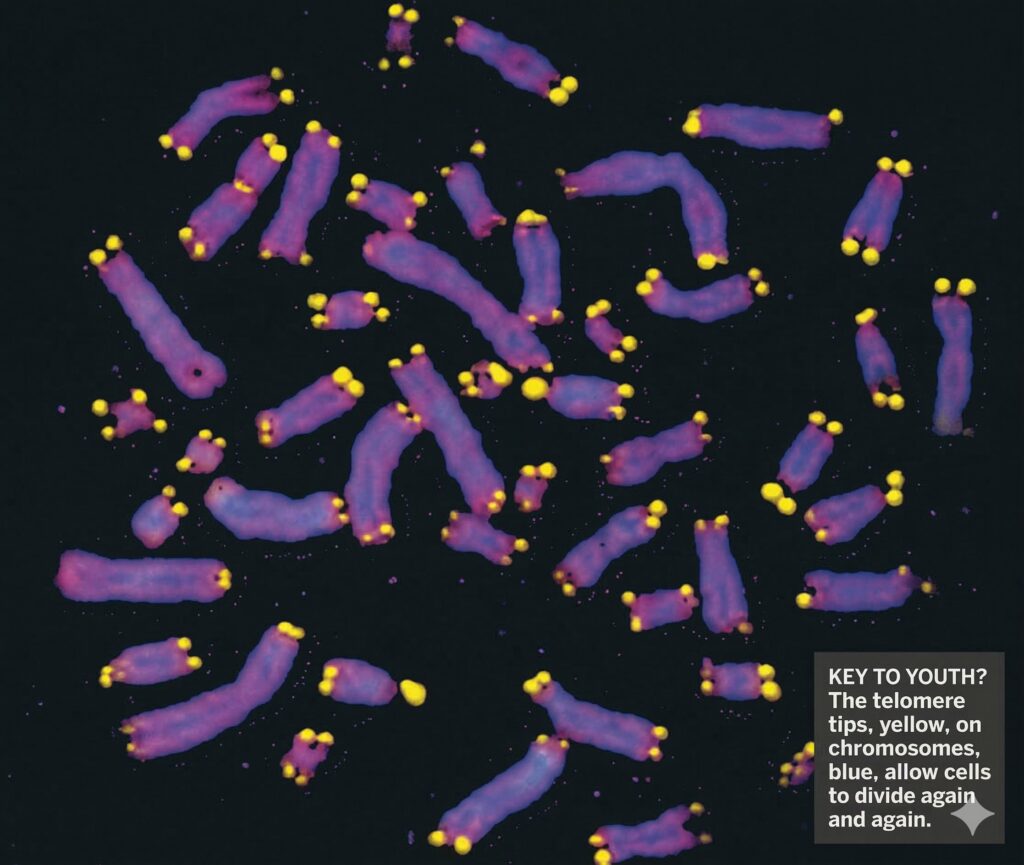
  3. Another application is maintaining youthfulness by revitalising DNA. He noted that the research remains inconclusive and proceeded to quote from the TIME article titled “On the Horizon.” He began by reading the caption from an image:

    ‘The telomere tips, yellow, on chromosomes, blue, allow cells to divide again and again.’

    He explained that during mitosis, the process where cells divide to create new cells, the tips of the chromosomes or telomeres shorten, and this causes ageing. If scientists can halt the shortening and lengthen the telomeres, achieving youthfulness may become possible. He clarified that they are still experimenting with this theory.

  4. He continued reading the article under the subheading, “A Shot for Aging Body Parts?”, noting the text reads:

    ‘Eight years ago, scientists discovered that the tips of chromosomes in tissue cells shorten each time the cells replicate–until a point is reached where the cells stop dividing altogether. That point, called the Hayflick limit, comes after about 50 replications, and may be at the heart of the process we call ageing.’

    He summarised that specialists from the Massachusetts Institute of Technology conducted experiments with telomeres in lab dishes, which showed that after 50 replications, the cells stop dividing. However, when they activated the enzyme telomerase to extend the telomeres, the lifespan of cells in the culture extended by another 20 divisions, thereby extending the youthfulness of the cells. Nevertheless, Xian Sheng stated that scientists only suspect that the shortening of telomeres accounts for human ageing, as they have yet to conduct sufficient experiments to provide conclusive proof.
(J) Science is imperfect.
  1. Xian Sheng stated that in science, nothing is perfect. Yet, for scientists, they represent the perfection of the imperfect. He explained that perfection is not the goal of scientific experimentation, as various factors may always challenge the hypothesis.

  2. There may be more factors that could further deteriorate the results of these scientific experiments in the future. The results may appear perfect today, but they could become imperfect at some point, for science is not definite.

  3. Xian Sheng reminded the followers of what he had previously stated: “A fact can be a fact today, but tomorrow, it may not be a fact.” This is because new scientific discoveries may emerge that override earlier findings.

(K) Killer T Cells.
  1. Xian Sheng began by stating that genetic engineering is a matter of great seriousness and should not be taken lightly by researchers.

  2. Xian Sheng referred to the section titled “Beyond Vaccination” in the TIME Magazine article On the Horizon. He explained that when discussing vaccinations or inoculations, doctors essentially create a mild infection—without causing the full-blown disease—to help the body develop immunity against those diseases. Today, we are immunised against many such diseases.

  3. The article goes on to state,

    ‘The vaccines of tomorrow are likely to be far more sophisticated concoctions, made up of snippets of raw DNA from the genome of a virus, bacterium or parasite. Using DNA, as opposed to proteins made by a microbe, elicits a more vigorous, aggressive response from the immune system. While most of the current vaccines do a good job of marshaling antibodies against an invading marauder, they often don’t reliably coax the body into churning out killer T cells, the smart bombs of the immune system that strike at the offending microbes with great specificity.’

  4. Xian Sheng paused his reading to explain that the ultimate goal of DNA-based vaccines is to generate killer T cells from the raw DNA of viruses, bacteria, or parasites. He then asked the followers if they were familiar with killer T cells. He noted that these cells are capable of tracking down and destroying specific infected cells with surgical precision.

  5. Xian Sheng explained that we are surrounded by many different types of parasites. Those that live in the hair on our heads and armpits are lice, while mites live on our skin.

  6. He continued reading,

    ‘In early tests, DNA-based vaccines triggered both responses. For example, immunologists reported last fall that patients injected with an experimental DNA-based malaria vaccine showed not just malaria antibodies but also significant levels of killer T cells. The potential goes beyond bugs. Because gene-based vaccines can easily be manipulated by adding or deleting DNA, doctors are applying the technique to treat various forms of cancer. The work is still limited to animals, but researchers have developed inoculations made up of tumour cells that act as a red flag to rally an animal’s immune system against the tumour. “There is a long road ahead” for these cancer vaccines, says Duke University’s Dr Eli Gilboa. But it’s very promising.’

  7. This represents new research arising from the study of the human genome. The use of killer T cells, scientifically known as CD8+ T cells, to fight cancer has seen significant breakthroughs in recent years. Nevertheless, Xian Sheng questioned whether this type of genetic engineering serves the good or the bad of human progress.

(L) Growing human tissues.
  1. Xian Sheng suggested that in the near future, scientists could progress to the extent of growing human tissue, effectively creating a tissue factory to produce human tissues for replacement. Xian Sheng believed that this is not impossible, given that scientists already possess the capability to grow tissues.

  2. Once again, Xian Sheng stated his primary concern as to whether genetic science would be used for good or bad.

  3. Xian Sheng advised parents to encourage their children to study biology rather than IT. However, he noted that they would need to continue their studies further if they wish to enter the field of genetic engineering.

(M) Would you like a designer baby?
  1. Xian Sheng referenced the TIME article “Designer Babies” and asked for the followers’ opinion on whether scientists should cater to parents who wish to choose their babies’ appearance. He noted that this is a subject the followers must discuss.

  2. To provide an example of what designer babies entailed, he asked them what changes they would like to see in their children if the technology were available today: improvements to their appearance, more striking facial features, a specific skin colour, different coloured eyes, or even bigger eyes, as designer babies could make it a reality.

  3. Xian Sheng asked the followers to seriously consider whether it is a good idea to have the ability to design our children, including determining their sex, as the technology may soon be available. Nevertheless, the article stated that at the present stage of genetic therapy, the success rate is not 100% guaranteed.

  4. Xian Sheng referred to a poll in the article about public opinion on several questions.

    Xian Sheng paused to wonder why only 33% chose greater intelligence for their baby, questioning the views of the remaining 67%. He expressed his opinion that greater intelligence is beneficial and should ideally have 100% support. However, he acknowledged that some might choose based on moral values, preferring to let their children develop their intelligence naturally. 
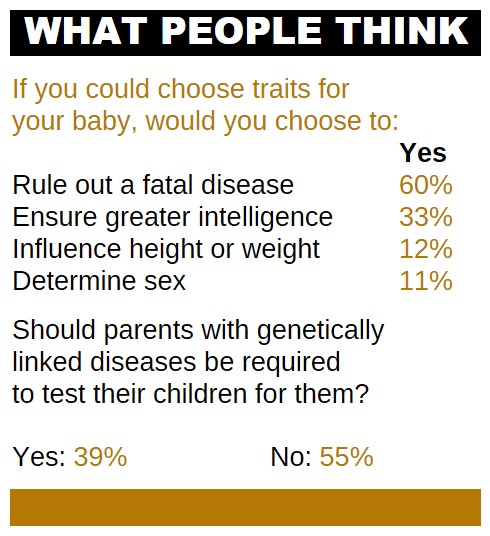
  1. Regarding the second question: “Should parents with genetically linked diseases be required to test their children for them?”, he questioned why the majority of respondents would not want to test their children for hereditary genetic diseases.

  1. Xian Sheng explained that the results reflected public opinion at that particular time, though the poll did not specify the total number of participants. He estimated that for a survey in the US, the number of people polled would likely be in the range of several thousand.

  2. In another poll:

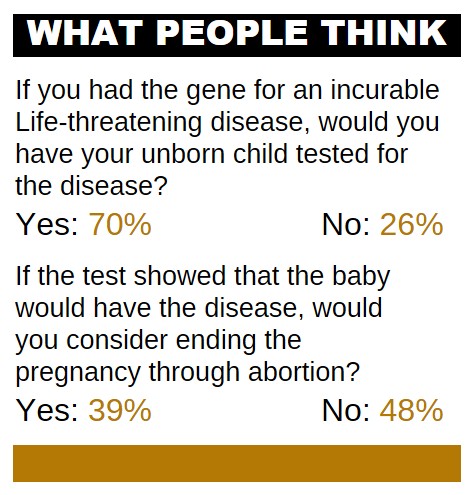
Xian Sheng asked the followers what they considered to be incurable, life-threatening diseases. He mentioned that he once advised a couple with such a condition not to have any more children, but they did not listen, and their child was born with the disease. The couple were apparently incompatible as both carried the genes for the illness. Consequently, their children ended up with leukaemia.

  1. Regarding the last question was: “If the test showed that the baby would have the disease, would you consider ending the pregnancy through abortion?”, he questioned why the majority would answer “No” to ending the pregnancy. Returning to the example of the earlier couple, their child had leukaemia and was unlikely to live beyond twelve years of age. He asked why parents would choose to bring a child into the world knowing they would die so young. If the majority do not agree with abortion, then it is the minority who must suffer the consequences of such decisions.

(N) Designer babies or natural babies?
  1. Xian Sheng read the introductory summary of the “Designer Babies” article: ‘Parents can now pick a kid’s sex and screen for genetic illness. Will they someday select for brains and beauty too?’

  2. Xian Sheng raised the question of whether we would select for brains and beauty for our children. He then questioned whether scientists would be capable of achieving this and if the possibility truly exists. Finally, he asked whether we would prefer to allow things to happen naturally.

(O) The Master Race Ideology.
  1. Xian Sheng said that the Nazis in Germany tried to implement their ideology of a master race during Adolf Hitler’s reign. However, they lacked the genetic engineering tools available today to create “designer babies.” Instead, they relied on a loosely defined concept of the “Aryan race” to pursue their ideology of a master race.

  2. If the Nazis suspected anyone from the so-called subhuman races of possessing higher intelligence than they did, they would have them killed.

  3. Xian Sheng questioned the methods used to measure and determine intelligence. No one has established that intelligence is linked to a specific race, and the world has not reached a stage where intelligence can be definitively measured, except in Hitler’s own mind.

  4. Xian Sheng asked if anyone had found Hitler’s body. He suggested that if we could dissect and study Hitler’s brain, we might discover if he suffered from syphilis of the brain, which could have caused the delusions of grandeur that the German race was the master race. He noted that he had mentioned in previous sermons reading about syphilis of the brain in a book, describing it as a sickness of the brain. He questioned whether this condition was what led Hitler to believe he belonged to a master race with the right to kill others.

(P) Is Slobodan Milošević the equivalent of Hitler?
  1. Xian Sheng asked whether Slobodan Milošević is the equivalent of Hitler, as he is currently practising genocide. He noted that the capital city of Kosovo, Pristina, is empty. Those Kosovo Albanians who refused to leave were shot dead by the Serbian security forces.5

  2. Xian Sheng described the ethnic cleansing as genocide (although the International Criminal Tribunal for the former Yugoslavia (ICTY) thought it was not genocide). He explained that the city of Pristina is a mix of the majority ethnic Albanians, who are mainly Muslims, with minority Christians and the minority ethnic Serbs. However, the Serbian security forces do not care about the religion of the ethnic Albanians and would shoot them if they refused to leave.

  3. Xian Sheng repeated his initial question: Is Milošević equivalent to Hitler? He explained that Milošević suffered from a bad childhood trauma where both parents committed suicide when he was young. He led a difficult life, which seemed to shape his rise to becoming a Serbian President who wielded nationalism as a cold, calculated tool for consolidating power.

  4. Xian Sheng then asked whether the Serbian President should be charged under international law for war crimes and genocide. Xian Sheng expressed his opinion that genocide is a crime that must not be tolerated.

  5. Xian Sheng stated his support for the NATO forces led by the Americans in the Kosovo War. He then asked if the followers remembered what he mentioned about the New Order.

(Q) A New Order
  1. Xian Sheng explained that his defamation lawsuit against Fong Chan Onn is rooted in his vision for the New Order. He encouraged the followers to contemplate this concept, clarifying that the New Order relies on a fundamental principle: whenever minority groups are bullied within any country, those with the necessary power and influence are duty-bound to intervene and stop the mistreatment.

  2. Xian Sheng proposed that ASEAN should practise the principles of the New Order. Citing the violence carried out by the Indonesian military, such as grenade attacks against the (majority) Christian community in Timor-Leste, he argued that ASEAN member states must voice their opposition. By speaking out against such actions, these nations would actively work towards the creation of a New Order. Furthermore, he suggested that all ASEAN countries should boycott Indonesia if the government allowed its military to be involved in the killing of civilians.

  3. In the unfortunate event that another May 13 incident should occur in Malaysia, Xian Sheng asked who would be responsible for speaking out. He stated that every member of ASEAN has a duty to voice their opposition to such events.

  4. Xian Sheng highlighted the racial riots in Indonesia during which Chinese citizens were killed, questioning why no ASEAN countries objected to the incident. He expressed the view that the ASEAN organisation is useless because it failed to take a stand or demand that the Indonesian government halt the targeted killing of a specific race. According to Xian Sheng, the military has a duty to protect all citizens by stopping ethnic violence—even if that requires using force against those from the group responsible for the massacre. This principle of active, moral intervention is the essence of the New Order.

  5. Xian Sheng then asked who started the New Order. He answered that it was George H.W. Bush, as noted in his previous sermons. Returning to the subject of his court case, Xian Sheng explained that the defendant’s legal counsel failed to understand the New Order that Xian Sheng had envisioned and discussed; instead, the lawyer accused Xian Sheng of requesting that China send its military to conquer Malaysia to defend the Chinese population here. Xian Sheng questioned the lawyer’s qualifications for failing to understand his discourse on the New Order. He suggested it might also be that Fong Chan Onn’s lawyers are simply stupid.

  6. Xian Sheng clarified that the New Order is a system designed to prevent anyone from bullying anyone else in any country. He argued that the Americans should have intervened to stop the Nazis from murdering six million Jews. Furthermore, he stated that the United Nations had a responsibility to stop the Republic of China (ROC) government, under the leadership of Chiang Kai-shek, from killing approximately 30,000 Chinese citizens in Taiwan and 1,000 from the mainland. He clarified, however, that these acts were not classified as genocide because it was the Chinese military killing its own citizens. These events were framed as internal Chinese politics to avoid outside interference. Xian Sheng scoffed at the Kuomintang party (KMT) for dismissing the killings as internal politics instead of a brutal crackdown and massacre.

(R) “The Chinese have not hurt me enough, bringing all this filth!” ~ Xian Sheng.
  1. Xian Sheng said that the people did not understand what he said when he made the following statement during the court case: “The Chinese have not hurt me enough, bringing all this filth!” He asked if any of the followers present had heard him make that statement. Only one follower present heard it as the others did not attend the court case.

  2. The judge also failed to understand what Xian Sheng said and requested him to repeat what he said. He did so clearly, saying, “The Chinese have not hurt me enough, bringing all this filth!” In this context, Xian Sheng was referring specifically to the leadership of the MCA. He even made a pointed side note regarding the Nipah Virus outbreak, remarking that those leaders were lucky the virus claimed the lives of pigs rather than them. The “filth” he spoke of referred to the fabricated allegations previously levelled against him. These leaders had earlier attempted to frame him for crimes intended to paint him as a sexual deviant cult leader, seeking to belittle and ridicule him in an effort to ruin his reputation as a spiritual teacher. Ultimately, Xian Sheng persevered and won in every legal battle.

  3. Xian Sheng pointed out a perceived double standard in the actions of the MCA leadership, asserting that they would never dare to ridicule, belittle, or downtrodden the Malays. He observed that their fake and false accusations were reserved solely for their own Chinese countrymen, highlighting a lack of courage to challenge other ethnic groups while targeting their own.

  4. During the testimony, a Malay friend of Xian Sheng was called as a witness to the 1982 conviction for illegal assembly. The witness clarified that he did not agree with the basis of those original charges. Xian Sheng expressed deep frustration with his counsel, Simon Hue, for failing to research this vital information. He noted that Simon was completely unaware of that judgment and missed a vital opportunity to discredit the evidence. Xian Sheng argued that his lawyer should have highlighted the logical absurdity of the prior conviction, questioning how a “one-man assembly” could possibly constitute a crime under the law.

  5. Xian Sheng revealed that he had briefed Simon Hue, informing him that Judge (Tan Sri) Gunn Chit Tuan had “lost his head” during the one-man illegal assembly judgment and then threatened Xian Sheng with contempt of court. However, Simon had apparently forgotten this. During the proceedings, Simon Hue turned around to Xian Sheng and asked about the illegal assembly as if he were hearing of it for the first time. By forgetting this detail, he missed a significant opportunity, as a “one-man” illegal assembly is a unique and highly unusual judgment. (Legally, an assembly requires a gathering of two or more people; thus, such a charge is inapplicable to a single individual.) Despite this, the defendants employed that prior charge in an attempt to get Cikgu Yusoff to discredit Xian Sheng in court.

  6. Xian Sheng praised Cikgu Yusoff for standing firm during his testimony, specifically for his refusal to comment on assemblies related to religious events, citing the nation’s freedom of religion. Speaking in Malay, Cikgu Yusoff stated, “Itu hal peribadi, itu hal kebebasan agama” (That is a personal matter, that is a matter of religious freedom). Consequently, he declined to comment despite pressure from the defendant’s lawyer regarding his support for Xian Sheng’s illegal assembly conviction. Xian Sheng expressed his deep dissatisfaction with Simon Hue, noting that because the lawyer had not done his research, he sat in silence while Cikgu Yusoff was badgered by the opposing counsel.

  7. Xian Sheng remarked that had he been the lawyer at the time, he would have stated, “Your Honour, the client has already said that it was a one-man illegal assembly.” Instead, Simon Hue squandered the chance to present this compelling counter-argument and remained silent. Xian Sheng stated that he would write a further letter to Simon Hue regarding this one-man illegal assembly issue, addressing his failure to remember it.

  8. Xian Sheng recounted the incident that led to his charge for a one-man illegal assembly. During the 1982 court proceedings, he felt it necessary to inform Judge Gunn that he had studied constitutional law under Professor Dr Ahmad Ibrahim; he recalled the Professor stating specifically that Article 11, regarding the freedom of religion, is absolute under the Federal Constitution. However, Judge Gunn countered by asserting that nothing is absolute. Consequently, he acquitted all other followers and charged only Xian Sheng with illegal assembly. This prompted Xian Sheng to remark that Judge Gunn had “lost his head”. The judge complained about this comment and instructed Xian Sheng’s lawyer to inform him that such statements were impermissible. Nevertheless, Xian Sheng maintained that the judgment was clearly a case of “losing one’s head” when it resulted in a one-man illegal assembly charge. He was also threatened with contempt of court, to which he responded that the judge should have proceeded with the jail sentence, as he would have gone willingly.

  9. Brother John Yap provided the missing details, explaining that Xian Sheng countered Judge Gunn’s assertion that “nothing is absolute” by stating, “GOD is absolute.” This statement infuriated the judge. Unfortunately, Simon Hue had forgotten these details, which explains why he made no attempt to protest or object, allowing the defendants’ lawyer to badger Cikgu Yusoff. Xian Sheng expressed deep frustration with Simon Hue, feeling that he could no longer communicate with such an irresponsible lawyer.

(S) Designer babies – right or wrong?
  1. Returning to the subject of genetic engineering, Xian Sheng encouraged the followers to read up on this topic when they have the time, as it is very important. He advised that after reading, we should analyse the information and ask ourselves whether we agree with the concepts presented, particularly regarding the idea of designer babies.

  2. The concept of designer babies suggests that we might eventually be able to choose specific physical characteristics for our children, including a large head, large eyes, or broad shoulders. Xian Sheng asked the followers which features they would desire for their babies. Brother John Yap compared this process to visiting a supermarket to select what we might like.

  3. Brother Robert Low expressed his hope that this would never become a reality, arguing that women would no longer have a need for men. He suggested that a modern woman earning a salary of RM5k to RM6k would not require a husband, as she could simply visit a specialised fertility clinic for artificial insemination and select specific features for her designer baby. He concluded that the danger lies in men being left out of the process entirely.

  4. Xian Sheng continued his inquiry by suggesting another feature: the height of their child. Finally, he questioned whether this practice is morally right and whether the followers should support genetic engineering, particularly the concept of designer babies.

(T) Baitiangong accepts designer babies if the sex ratio of male to female is 1:1.2.
  1. Xian Sheng shared his view that if sex were the sole criterion for designer babies, it would be beneficial for the sex ratio to be one male to 1.2 females, or 1:1.2.6  He questioned who in society would be prepared to accept this 1:1.2 ratio or whether they believe a ratio of 1:1 male to female is fair.

  2. Xian Sheng clarified that within Baitiangong, the followers must understand that when he spoke of the 1:1.2 male-to-female ratio, he was referring to the collective consciousness of mankind. If the sex of designer babies is selected to maintain this 1:1.2 ratio, then it is considered acceptable. Xian Sheng requested that the followers bear this in mind. Conversely, if the public desire is to produce more males than females, then designer babies are not accepted for that purpose.

  3. Xian Sheng explained that Baitiangong possessed prior knowledge of the concept of designer babies, particularly regarding sex selection. He questioned whether the followers realised that when he first introduced the ratio of 1 male to 1.2 females, he was discussing the concept of designer babies approximately 20 years ahead of time, though limited to sex selection alone.

  4. Xian Sheng warned that if the reverse were true, such as a ratio of 2 males to 1 female, then we would be asking for trouble. He suggested that we could pray for those involved in designing babies to possess the consciousness to maintain a sex ratio of 1 male to 1.2 females. He added that if society has accepted designer babies regarding sex selection, and a 1:1.2 male-to-female ratio is chosen where women outnumber men, then we would accept.

  5. Xian Sheng reiterated that Baitiangong’s teachings were ahead of their time concerning sex selection—a subject that modern science is now addressing through the concept of designer babies. He dismissed the notion that Baitiangong does not discuss advanced scientific topics like designer babies; however, he clarified that this is limited to sex selection only, rather than physical appearance, such as height, beauty or features.

  6. Xian Sheng explained that genetic engineering is accepted when it involves the detection of hereditary diseases within the father’s sperm and the mother’s ovum. By using genetic therapy to render those genes recessive, these hereditary diseases can be suppressed from becoming dominant. Consequently, the baby would be born without having to suffer from the parents’ diseases. This specific form of genetic engineering is acceptable in Baitiangong.

  7. Xian Sheng clarified that regarding designer babies, Baitiangong does not accept genetic engineering intended to alter features such as the eyes and hair or to increase intelligence. He further clarified that if geneticists are not careful when engineering the intelligence or IQ of babies, they could inadvertently create a group of people who believe themselves to be a master race or even a killer race. Xian Sheng used the term “homicidal brain” to describe psychopaths who kill without remorse or empathy. He warned that this is a potential future for the human race if geneticists tamper with genes for human intelligence, and he reminded them that extreme caution must be exercised in that area.

  8. Xian Sheng stated that intelligence must arise naturally from the natural development of the brain. Regarding the ratio of males versus females, we should be praying for the consciousness that would lead people to naturally desire a higher population of females than males on this Earth.

  9. He reiterated that if there are more males than females, there would be a lot of problems. He identified that the first and foremost problem is frustration, which would lead to death, murder, robbery, manslaughter, passionate killing and all sorts of problems. Society needs to consider all the negative consequences of such an imbalance.

  1. A dead-end host is an infected individual who does not shed enough virus to infect others, thus breaking the chain of transmission. This differs from amplifying hosts such as pigs, which spread the virus efficiently.
  2. based on the false premise that Iraq still possessed weapons of mass destruction (WMD)
  3. In 1969, President Nixon unilaterally ended the U.S. offensive biological weapons program and ordered the destruction of stockpiles. The U.S. signed the Biological Weapons Convention (BWC) in 1972. In 1997, the U.S. ratified the Chemical Weapons Convention (CWC), committing to destroy its chemical weapons stockpiles.
  4. In 1999, TIME magazine quoted 100,000 genes, though current science indicates humans possess only 20,000–25,000 genes. It appears Xian Sheng recalled this statistic incorrectly.
  5. The city appeared empty because the majority of the population consisted of Kosovo Albanians who had been expelled from their homes during an ethnic cleansing campaign against civilians. Notably, the International Criminal Tribunal for the former Yugoslavia (ICTY) indicted Milošević for genocide in Bosnia and Croatia, though not for genocide in Kosovo.
  6. A 1:1.2 male-to-female ratio promotes social stability by aligning with the tendency of some men to seek multiple partners. In a 1:1 society, all women are already paired, so a man seeking an additional partner must take her from another man—sparking competition and conflict. With a slight surplus of women, e.g., 2 extra women per 10 men, men can form additional partnerships without displacing others, reducing rivalry and fostering a more harmonious society.